

Commercial Snow Removal and Salting in Markham, Richmond Hill and Vaughan
Parking lot plowing, entrance and walkway clearing, and salting for plazas, offices, medical buildings, condos and industrial sites across York Region, with a time-stamped record of every visit.

When a business opens after a storm, the parking lot, entrances and walkways are the first thing staff and customers see, and the first place someone can get hurt. Green Crest Landscaping plows, clears and salts commercial properties in Markham, Richmond Hill, Vaughan, Newmarket, Aurora and Thornhill. Commercial sites run on their own routes, planned around your opening hours, so they are not competing with residential driveways for crew time.
Properties we service
- Retail plazas and strip malls along Highway 7, Yonge Street, Markham Road and other busy corridors.
- Office buildings and professional suites.
- Medical and dental clinics, where accessible entrances must be clear before the first patient.
- Condominium and townhouse corporations: private roads, visitor parking and common walkways.
- Industrial units and warehouses, including loading areas and truck aprons.
- Places of worship, schools and community buildings with event-day scheduling.
- Rental and mixed-use properties managed by property management companies.
What commercial snow service includes
Parking lot plowing
Drive aisles and stalls cleared, accessible spaces first, snow stacked where it will not block sightlines or drains.
Salting and de-icing
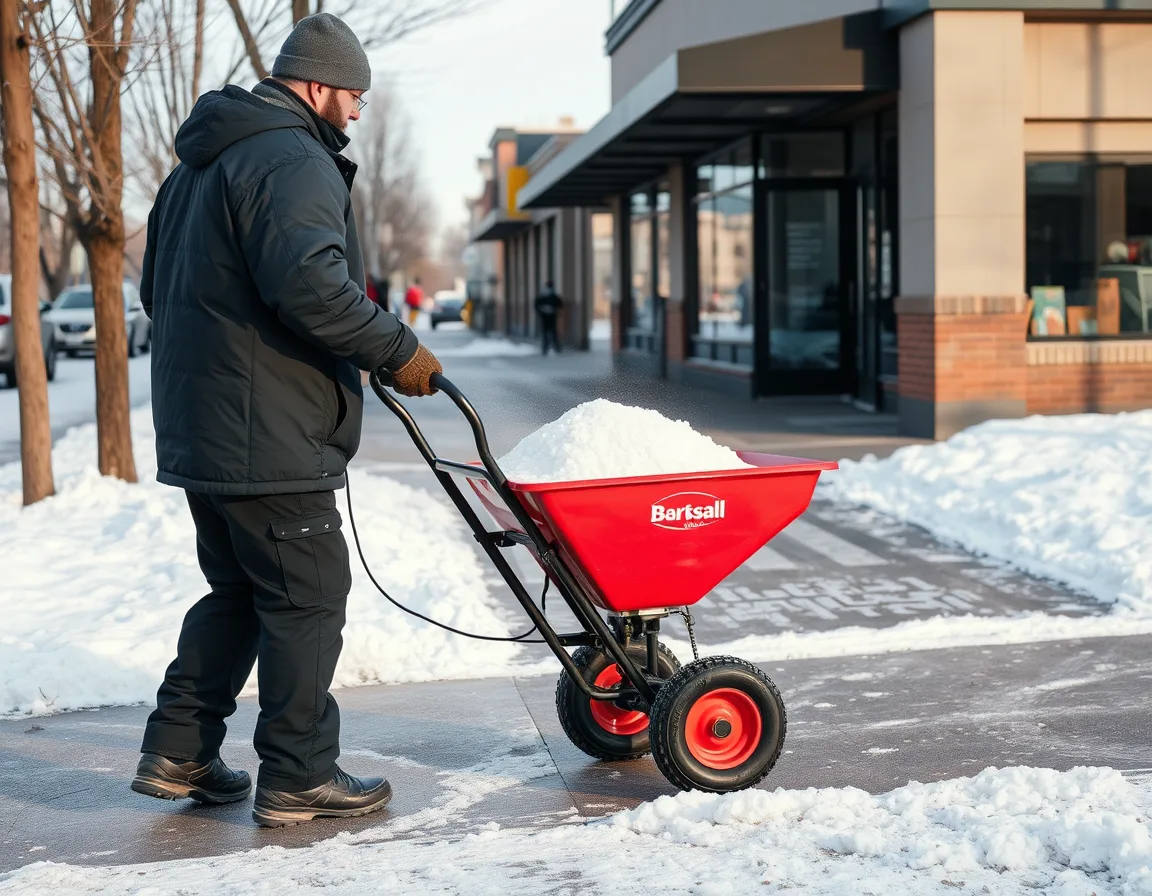
Entrances, walkways, ramps and lots salted before opening and after freezing rain or refreeze.

Walkways and entrances
Doors, ramps, steps, fire exits and paths to transit stops cleared by hand.
- Trigger-based plowing at the snowfall depth agreed for your site, with return visits during long storms.
- Accessible routes first: barrier-free parking, curb cuts, ramps and main entrances.
- Fire routes and exits kept clear.
- Salting programs for lots, walkways and entrances, applied before opening and as conditions change.
- Snow stacking and relocation so piles do not cover stalls, hydrants, catch basins or signage.
- Visit records with date and time for every plow and salt application.
Why visit records matter
For property managers and business owners, snow and ice are as much about liability as convenience. Slip-and-fall claims often turn on whether reasonable winter maintenance was carried out, and when. Every commercial visit we complete is logged with the date, time and services performed, so you have a clear record of your site’s winter maintenance. Ask your insurer what documentation they expect, and we will make sure our records fit.
How commercial service is set up
- Site assessment. We walk the property with you to map drive aisles, stall layout, accessible spaces, entrances, loading docks, drains, hydrants and the best snow storage areas.
- Service plan. We agree trigger depth, service windows (for example, lot clear before 7 a.m.), salting rules and any areas that need hand clearing.
- Written proposal. You receive a written scope and quote before the season starts.
- Pre-season marking. Curbs, islands and landscape edges are staked before the ground freezes so plows can find them under snow.
- Storm operations. Crews monitor conditions overnight and clear the site in order of priority, then return as the storm continues.
- Reporting. Visit logs are available for every service.
Salting and ice control for commercial sites
Most winter injuries happen on ice, not snow. Freezing rain, overnight refreeze of meltwater and shaded walkways that never see sun all create slippery surfaces long after the plow has gone. A commercial salting program applies ice control before opening and whenever conditions call for it, focusing on entrances, ramps, crosswalks and pedestrian paths. We match the product and rate to the surface and the temperature, and keep salt away from planting beds where possible.
Commercial snow removal by city
We run commercial routes across York Region, with the heaviest concentration in Markham, Richmond Hill and Vaughan.
What affects a commercial quote
- Lot size, number of stalls and layout of drive aisles.
- Length of walkways, number of entrances, ramps and stairs needing hand work.
- Service window and opening hours, including weekend and holiday operation.
- Trigger depth and the number of return visits during extended storms.
- Salting scope and frequency.
- Snow storage space on site, or the need to relocate snow.
- Per-event, per-push or seasonal billing. See seasonal snow removal contracts.
Questions to ask any commercial snow contractor
- What is the trigger depth, and how many return visits are included during a long storm?
- Which areas are cleared first?
- Is salting automatic, and what triggers an application?
- Do you provide visit records with date and time?
- Where will snow be stacked, and what happens when storage runs out?
- What documentation will you provide for your property manager or insurer?
Commercial snow removal FAQs
Do you clear lots overnight?
Yes. Commercial routes are scheduled so lots and entrances are clear before opening wherever the timing of the storm allows.
Do you offer salting without plowing?
Yes. Salting and ice control can be scheduled on their own, which suits sites with their own plowing arrangement or small lots that mostly need ice control.
Can you handle condo private roads and visitor parking?
Yes. We work with condominium and townhouse corporations on private roads, visitor parking, mailbox areas and common walkways.
What paperwork do property managers receive?
A written scope before the season and a log of every visit with date and time. Ask at the site assessment about any other documents your property manager or landlord requires.
When should we arrange winter service?
September to November. Commercial routes are planned before the first snowfall, and site marking needs to happen before the ground freezes.
Entrances, accessibility and fire routes first
On a commercial site, the order of work matters as much as the work itself. Entrances, accessible parking stalls, curb cuts and ramps, fire routes and the sidewalks in front of the building are cleared and salted first, so staff, customers and emergency vehicles can get in. Drive aisles and parking stalls come next, then loading areas, garbage enclosures and the edges of the lot. We agree that order with you before winter, so the crew knows which areas matter most at your site.
Planning your site before the first storm
- Walk the site together or send photos and a site plan, marking entrances, ramps, fire routes, loading docks and any areas that must stay open.
- Choose snow storage areas away from entrances, drains, sight lines at exits and landscaped islands.
- Mark curbs, islands and bollards before the ground freezes, so they are not hit under snow.
- Agree on opening times: when the lot must be clear, including weekends for retail and places of worship.
- Agree on ice control for asphalt, concrete sidewalks and pavers, and on salting after freeze and thaw.
Multi-site property managers
If you manage several plazas, offices or industrial units across York Region, one contractor for all of them keeps scope, timing and records consistent. We can plan sites in Markham, Richmond Hill, Vaughan, Thornhill, Aurora and Newmarket together, with each site listed separately in your written proposal. Our commercial snow removal checklist for property managers covers what to confirm before signing with any contractor.
Condo townhomes and multi-residential properties
Condo townhome complexes and small apartment buildings need private roads, visitor parking, mailbox areas, walkways and building entrances cleared, often with very little room to store snow. We plan where snow goes before the season and agree with the board or manager which areas are cleared by machine and which by hand. Residents should keep cars moved on agreed days when full clearing is needed.
Salt, slips and winter risk
Slips on icy sidewalks and entrances are a real concern for any business. Clearing and salting reduces that risk, but it does not replace your own insurance and safety obligations. Talk to your insurer about what records they want you to keep for winter maintenance, and keep entrance mats dry and in place. Salting product choice matters too, especially near new concrete and pavers. See rock salt versus de-icers on concrete and interlock.
Commercial snow removal in every city we serve
See local pages for Markham, Richmond Hill, Vaughan, Thornhill, Aurora and Newmarket. Homeowners should see residential snow removal.
What to send for a commercial proposal
- The site address and a site plan or aerial photo, if you have one.
- Entrances, ramps, accessible stalls, fire routes and loading docks you need cleared first.
- The times the site must be open, including weekends and evenings.
- Surfaces that need special care: new concrete, pavers or decorative stone.
- Where snow may and may not be stored on the property.
Send it by WhatsApp or call 647-617-4020. You receive a written proposal for each site before the season starts.
Retail plazas, medical and professional offices, industrial units, condo townhome complexes and places of worship across York Region can all be planned this way, with the scope for each site written down before the first storm.
Request a commercial snow proposal
Tell us the address and type of property. We will book a site assessment and send a written scope for plowing, clearing and salting.