
Short answer: Keep mowing at your normal summer height until the grass stops growing, then make the final cut slightly lower, around 5 to 6 cm. Too long and the grass folds over under snow and invites snow mould. Too short and the crowns are exposed to cold and drying winds.
Why the final cut matters
Long grass bends under the weight of snow and stays wet against the soil all winter. That is ideal for snow mould. Scalped grass, on the other hand, loses the leaf surface it needs to store energy and is more exposed to winter damage. The goal is a tidy, medium-short lawn going into December.
When to do the last mow
In Richmond Hill, Aurora and Newmarket the lawn usually stops growing in early to mid November once daytime temperatures stay low. Do the final cut then, ideally after the leaves are cleared, so the mower is not chopping a thick wet layer.
Step by step
- Clear leaves from the lawn first.
- Sharpen the mower blade so it cuts cleanly instead of tearing.
- Lower the deck one notch from your summer setting.
- Mow when the grass is dry.
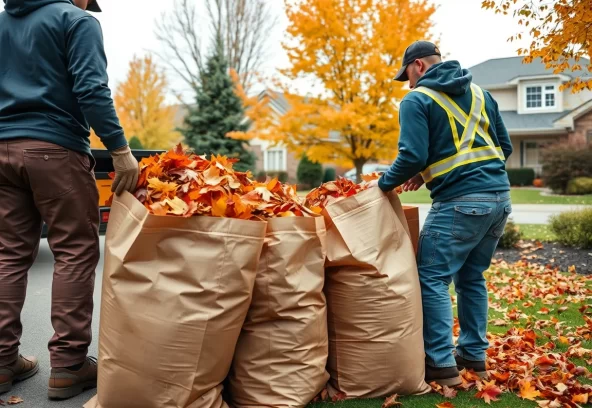
- Bag or mulch the clippings, then blow off walkways and the driveway.
What to avoid
- Scalping the lawn to “save a mow” in spring.
- Mowing frozen or frosty grass, which damages the blades.
- Leaving long grass under a layer of leaves.
When to call a professional
The final mow and edging are part of our fall yard cleanup, done after the leaves are cleared.
Questions homeowners ask
Should I bag the last clippings?
If they are clumping, yes. Light clippings can stay.
Can I mow in December?
If the grass is still growing and the ground is not frozen, a light trim is fine.
Does cutting short prevent snow mould?
A moderate final cut helps, but clearing leaves matters more.
Book your fall cleanup
Leaf cleanup and fall yard cleanup in Markham, Richmond Hill, Vaughan, Aurora and Newmarket. Send photos by WhatsApp for a written quote.
Omid, owner of Green Crest Landscaping
Omid runs Green Crest Landscaping in Richmond Hill and plans every leaf cleanup, fall cleanup and snow removal job the crew takes on. He writes these guides from the questions homeowners and property managers ask him on site across Markham, Richmond Hill, Vaughan, Aurora and Newmarket.
Green Crest Landscaping
430 Balkan Rd, Richmond Hill, ON L4C 2P3
Phone and WhatsApp: 647-617-4020 | Message on WhatsApp